EN
EN

160 kW / 418 kWh suyuq sovutishli energiya saqlash tizimi Ukrainaning qishgi sharoitida muvaffaqiyatli ishlamoqda
Energiya saqlash tizimlarini sovuq iqlimli mintaqalarda joriy etish muhim texnik qiyinchiliklarga sabab bo'ladi, ayniqsa uzun muddatli barqaror ishlashni doimiy ravishda nolga teng yoki undan past haroratlarda ta'minlashda. Past atrof-muhit harorati batareyalar elementlarining faolligiga, zaryadlash va razryadlash samaradorligiga hamda umumiy tizim ishonchliligiga salbiy ta'sir ko'rsatishi mumkin. Shuningdek, sovuq muhit kondensatsiya, namlik to'planishi va issiqlik kuchlanishlarining farqi kabi xavf-xatarlarni keltirib chiqaradi, bu esa batareyalarning issiqlik boshqaruvi va boshqaruv strategiyalariga qo'shimcha talablarni qo'yadi.
Ushbu holat tadqiqoti amaliyotda GSL ENERGY 160 kW / 418 kWh suv-sovitiladigan energiya saqlash tizimi mijoz ob'ektida o'rnatilgan Ukraina bu yerda qish sharoitlari uzun muddatli past haroratlar va qor/muz qoplamasini o'z ichiga oladi. Ushbu loyihada PCS invertori binoning ichida o'rnatilgan, batareya shkafalari esa tashqarida o'rnatilgan. Qattiq qish sharoitlariga qaramay, tizim ishonchli batareya isitish samaradorligi va to'liq nazorat ma'lumotlariga tayanib, barqaror va uzluksiz ishlashni namoyish etdi.
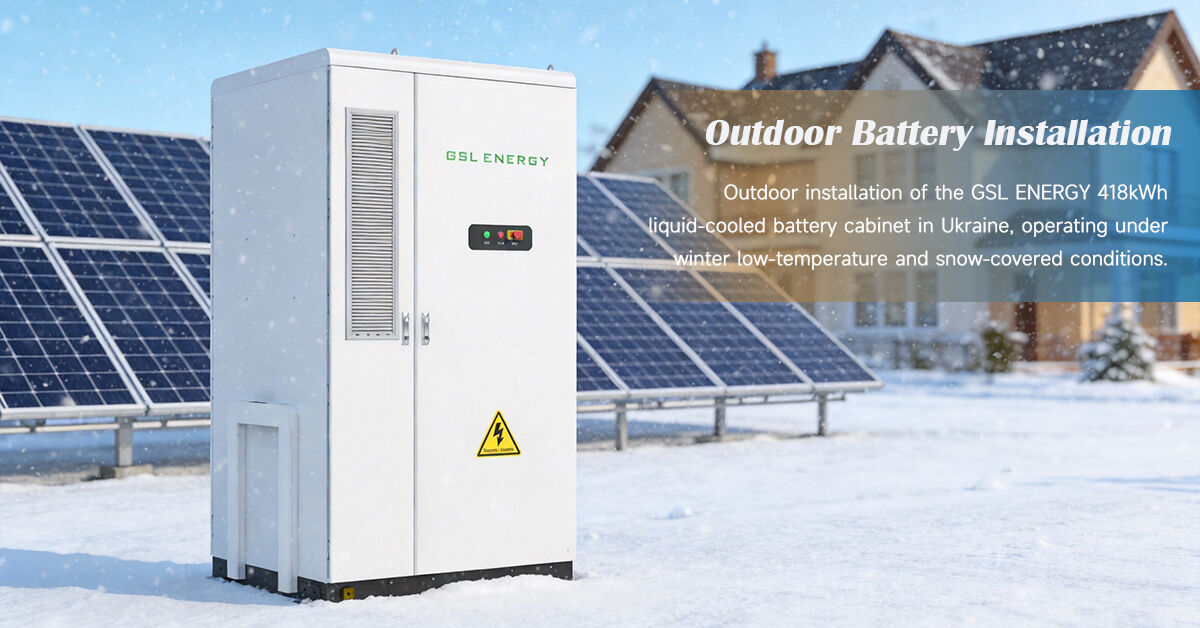
Loyiha umumiy ko'rinishi: Sovuq iqlimda energiya saqlash tizimining joriy etilishi
Loyiha joylashgan hududda qish mavsumi davomida doimiy ravishda past haroratlar hukm suradi, shu sababli energiya saqlash tizimi uzun muddatli qattiq tashqi sharoitlarda ishlashga moslashtirilishi talab etiladi. Loyihaning rejalashtirish bosqichida mijoz quyidagi talablarni aniq belgiladi:
- Batareya energiya saqlash tizimining uzoq muddatli tashqi sharoitda ishlash qobiliyati
- Past harorat sharoitlarida barqaror zaryadlash va razryadlash samaradorligi
- Kelajakdagi ekspluatatsiya va texnik xizmat ko'rsatish (O&M) uchun harorat nazorati hamda ish holati bo'yicha to'liq nazorat va kuzatuv qobiliyati
Ushbu sayt sharoitlari va operatsion talablarga asoslanib, yakuniy yechim sifatida ichki joylarda o'rnatiladigan PCS invertori + tashqi joylarda o'rnatiladigan batareya shkafidan foydalanildi. Bu dizayn tizimning barqarorligini oshiradi va o'rnatish, ekspluatatsiya hamda uzoq muddatli texnik xizmat ko'rsatish uchun kengroq moslashuvchanlik imkonini beradi.
Tizim konfiguratsiyasi
- Nominal quvvat / sig'im: 160 kW / 418 kWh
- Batareya texnologiyasi: Litiy-temir fosfat (LiFePO₄)
- Issiqlik boshqaruv tizimi: Faol suyuqlik sovutish tizimi va integratsiyalangan batareya isitish tizimi
- O'rnatish sxemasi:
- PCS invertori: Ichki joylarga o'rnatish
- Batareya shkafilari: Tashqi joylarga o'rnatish
- Qo'llanilish senariylari: Qayta tiklanadigan energiya manbalarini integratsiya qilish, zaxira elektr ta'minoti, yukni tartibga solish
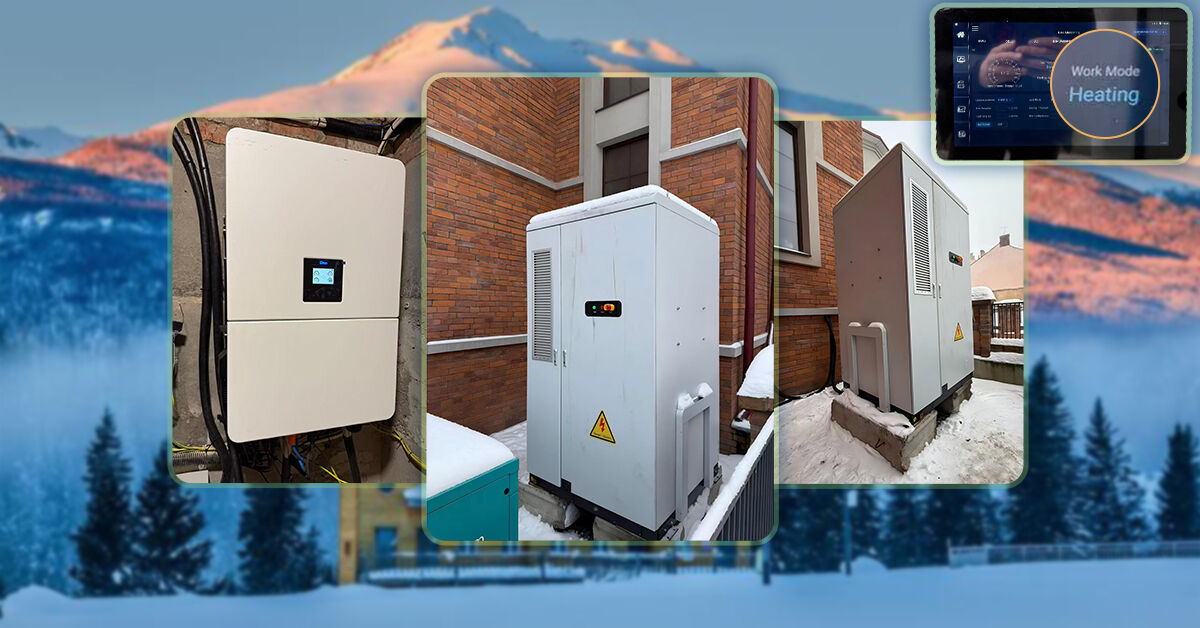
Nima uchun suyuq sovutish va haroratni boshqarish past haroratli muhitda juda muhim?
Energiya saqlash tizimlarida issiqlik boshqaruvi faqat yuqori haroratda ishlash paytida issiqlikni chiqarish bilan cheklangan emas. Sovuq iqlimli mintaqalarda issiqlik boshqaruvi butun yil davomida haroratni boshqarish tizimi sifatida ishlaydi va akkumulyator elementlarining optimal ishlash diapazonida qolishini ta'minlaydi.
Asosiy maqsadlar quyidagilardir:
- Past harorat sharoitida faol izolyatsiya va isitish
- Akkumulyator elementlarining doimiy haroratini saqlab turish orqali ishlashdagi o'zgarishlarni minimal darajada kamaytirish
- Akkumulyator shkaflari ichida harorat bir xilligini ta'minlash
- Mahalliy sovutilish tufayli sodir bo'ladigan quvvat noaniqliklari va tizim ogohlantirishlarini kamaytirish
- Tez-tez isitishni yoqish/o'chirish tsikllaridan qochish uchun bashorat qilinadigan haroratni boshqarish mantiqini ta'minlash
Muhandislik afzalligi suyuqlik bilan sovutiladigan energiya saqlash tizimlari ularning aniq, bir xil va boshqariladigan issiqlik tartibga solishini ta'minlash qobiliyatida yotadi. Suyuqlik aylanishi va aqlli boshqaruv strategiyalari orqali tizim past haroratli muhitda ishonchli batareya ishlashi uchun zarur bo'lgan barqaror ichki harorat chegaralarini o'rnatadi.
Past haroratda ishlash samaradorligi va monitoring ma'lumotlari
Mijoz tomonidan taqdim etilgan tizim monitoring ma'lumotlari va atrof-muhit harorati yozuvlariga asoslanib:
- Tashqi atrof-muhit haroratlari odatdagi qishlik past harorat oralig'ida qoldi
- Ichki batareya haroratlari doimiy ravishda xavfsiz ishlash chegaralarida saqlandi
- Batareya isitish va haroratni boshqarish funksiyalari oldindan belgilangan mantiqga muvofiq avtomatik ravishda faollashtirildi
- Atrof-muhit harorati belgilangan chegaradan pastga tushganda batareya isitish tizimi avtomatik ravishda ishga tushdi
- Suyuqlik bilan sovutish batareya elementlarini bir xil tarzda isitishni ta'minlab, uzluksiz zaryadlash va razryadlash operatsiyalarini amalga oshirdi
Monitoring egri chiziqlari ichki akkumulyator haroratlari va tashqi atrof muhiti o'rtasidagi samarali issiqlik izolyatsiyasini aniq namoyish etadi. Qish davrida ishlash davomida tizim nozik tebranishlar yoki rejasiz himoya to'xtatishlarsiz uzluksiz ishladi.
Suyuqlik bilan sovutiladigan energiya saqlash tizimlarining qish sharoitlaridagi afzalliklari
An'anaviy havo bilan sovutiladigan energiya saqlash tizimlariga nisbatan suyuqlik bilan sovutish past haroratli muhitda aniq afzalliklarga ega:
- Akkumulyator elementlari o'rtasidagi harorat farqi sezilarli darajada kamaytirilgan
- Mahalliy sovuq maydonlarga bog'liq unumdorlik pasayishini oldini olish
- Foydalanish uchun mavjud akkumulyator quvvati va umumiy tizim barqarorligini yaxshilash
Ushbu loyihada suyuqlik bilan sovutish issiqlik boshqaruvi tizimi qor va muz bilan qoplangan sharoitlarda ishonchli ishladi. Tez-tez tizim himoyasi ishlashi, quvvatning pasayishi yoki past haroratga bog'liq cheklovlar kuzatilmadi.
Tizim o'rnatish sxemasi operatsion barqarorlikka ta'siri
The “Ichki PCS + Tashqi akkumulyator tizimi” konfiguratsiya haqiqiy ishlatish davrida juda samarali bo'ldi:
- Ichki PCS o'rnatilishi elektr tarmog'iga ulanish uchun nazorat qilinadigan muhit yaratadi va texnik xizmat ko'rsatishni soddalashtiradi
- Tashqi akkumulyator shkaflari uzun muddatli tashqi ta'sirlarga chidamli bo'lishi uchun mos himoya darajalari, konstruktiv mustahkamlik va integratsiyalangan harorat nazorati bilan loyihalangan
- Tizim arxitekturasi uzoqdan nazorat qilishni, aniq operatsion mantiqni va to'liq ma'lumotlarni kuzatib borish imkonini beradi
Loyiha operatsiyasi xulosa
Qish operatsion sikli davomida energiya saqlash tizimi barqaror ishlashni saqlab qoldi:
- Past harorat sharoitida hech qanday nooddiy ogohlantirishlar yuz bermadi
- Harorat nazorati va akkumulyatorlarni isitish tezda javob berdi va loyiha mantiqiga muvofiq ishladi
- Umumiy tizim ishonchliligi va uzluksiz ishlash mijoz kutishlarini to'liq qondirdi
Ushbu loyiha muhandislik jihatdan yetilganlik va ishonchlilikni tasdiqlaydi GSL ENERGY suv bilan sovutiladigan energiya saqlash tizimlari sovuq iqlimli hududlarga va ochiq havoda o'rnatish uchun. Shuningdek, bu sharqiy Yevropa va boshqa dunyo bo'ylab sovuq mintaqalarda energiya saqlash loyihalariga takrorlanadigan namuna sifatida xizmat qiladi Sharqiy Yevropa va boshqa dunyo bo'ylab sovuq mintaqalar .
GSL ENERGY energiya saqlash yechimlarida tajriba
GSL ENERGY yuqori haroratli, past haroratli, yuqori namlikli hamda murakkab ochiq havoda ishlaydigan turli iqlim sharoitlarida energiya saqlash yechimlarini yetkazib berishda keng tajribaga ega. Standartlashtirilgan tizim platformasi va moslashuvchan muhandislik konfiguratsiyalari orqali GSL ENERGY ishonchli va barqaror energiya saqlash tizimlarini taqdim etadi xonalarga, kommerciya va sanoat (K&S) sohalari hamda elektr tarmog'iga ulanadigan (utility-scale) loyihalar uchun , haqiqiy operatsion talablarga mos ravishda moslashtirilgan.